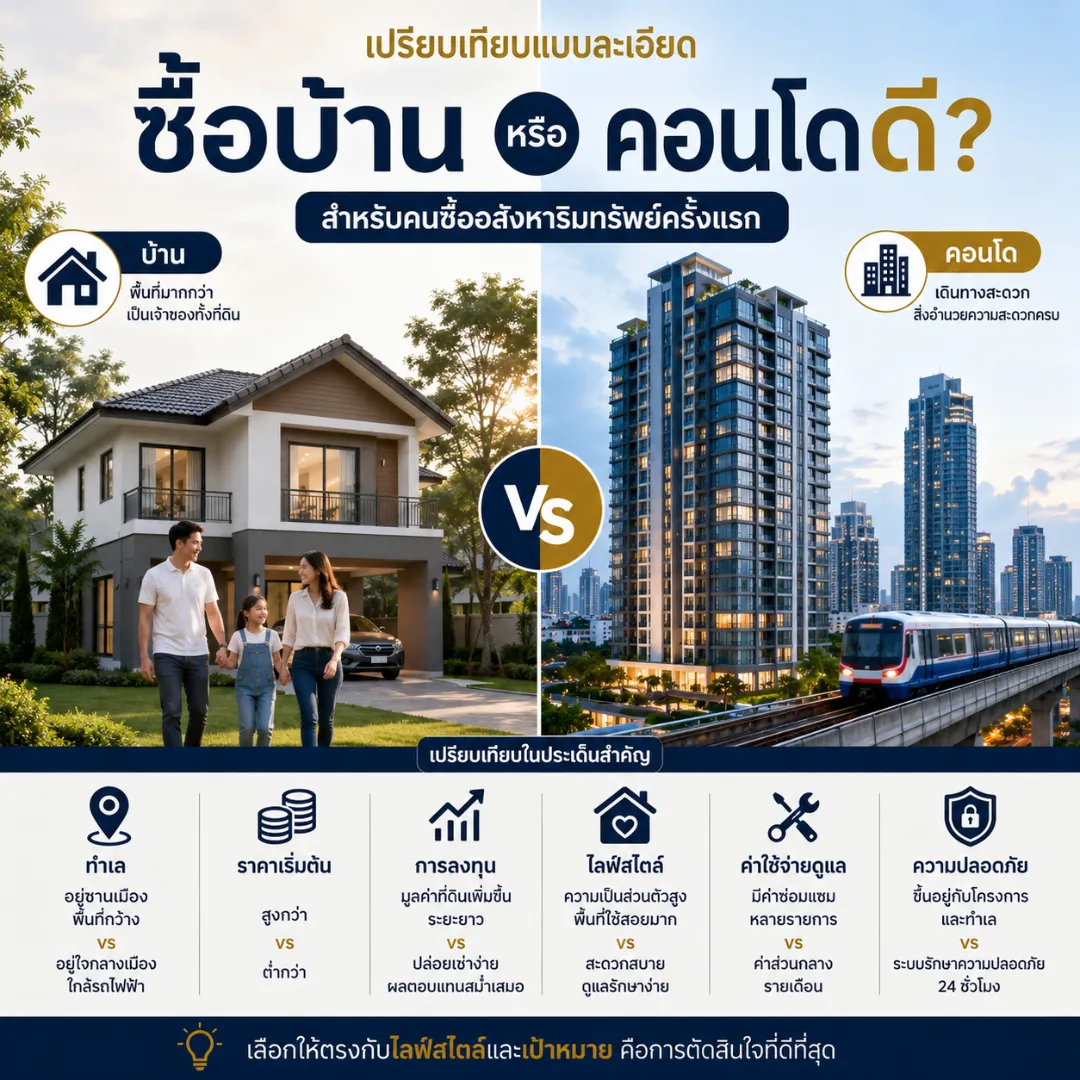
A Complete Guide for First-Time Homebuyers and Real Estate Investors in Thailand
Buying a property is one of the most significant financial decisions most people will make in their lifetime. Whether you're looking for a place to live, planning to build long-term wealth, or seeking rental income, choosing between a house and a condominium is often the first major decision you'll face.
There is no universal answer to whether a house or a condominium is the better option. The right choice depends on your lifestyle, financial goals, family plans, budget, and investment strategy.
This guide compares houses and condominiums in detail to help you make an informed decision that aligns with your personal and financial objectives.
Understanding the Difference Between a House and a Condominium
Before comparing benefits and drawbacks, it is important to understand the fundamental difference between these two types of real estate.
House
When purchasing a house, you own both the building and the land on which it sits.
Common house types include:
Detached houses
Semi-detached houses
Townhouses
Home offices
Because land ownership is included, houses often offer greater long-term appreciation potential.
Condominium
A condominium owner holds ownership of an individual unit while sharing ownership of common facilities and areas with other residents.
Condominiums are typically located in urban areas and are designed to maximize convenience and accessibility.
Comparing Purchase Costs
One of the first considerations for buyers is affordability.
Generally speaking:
Factor | House | Condominium |
|---|---|---|
Purchase Price | Higher | Lower |
Down Payment | Higher | Lower |
Maintenance Costs | Higher | Lower |
Common Area Fees | Lower | Higher |
Utility Costs | Higher | Lower |
For first-time buyers with limited budgets, condominiums often provide a more accessible entry point into the property market.
Houses, on the other hand, may require a larger financial commitment but can offer greater long-term benefits.
Location and Accessibility
Location remains the single most important factor in real estate.
As the saying goes:
"Location, Location, Location."
Why Condominiums Excel in Urban Areas
Most condominiums are strategically located near:
BTS Skytrain stations
MRT subway stations
Business districts
Shopping centers
Universities
Hospitals
This convenience often translates into stronger rental demand and easier resale opportunities.
Why Houses Offer Better Living Space
Houses are usually located in suburban or residential areas where land is more available.
Benefits include:
Larger living areas
Private parking spaces
Outdoor gardens
More bedrooms
Greater privacy
For families with children, these advantages can significantly improve quality of life.
Investment Potential
When evaluating a property as an investment, there are two primary sources of return:
Rental Income
Capital Appreciation
Understanding which type of property performs better in each category can help shape your investment strategy.
Condominiums and Rental Income
Condominiums generally generate stronger rental demand due to their convenient locations.
Popular tenant groups include:
Office workers
University students
Expatriates
Young professionals
Properties located near public transportation often experience higher occupancy rates and more consistent cash flow.
Example
Property Price: 3,000,000 THB
Monthly Rent: 15,000 THB
Annual Rental Income: 180,000 THB
Rental Yield:
180,000 ÷ 3,000,000 × 100
= 6%
A rental yield between 4% and 7% is generally considered attractive in many areas of Thailand.
Houses and Long-Term Appreciation
Houses benefit from land ownership, which is often the primary driver of long-term value growth.
While buildings depreciate over time, land values typically increase, especially in areas experiencing infrastructure development or urban expansion.
Investors with long-term horizons often prefer houses because of their appreciation potential.
Lifestyle Considerations
Your daily lifestyle should be a major factor when choosing between a house and a condominium.
House Lifestyle Advantages
A house may be ideal if you value:
Privacy
Space
Flexibility
Family living
Pet ownership
Homeowners can renovate, expand, and customize their property according to their needs.
Many people also appreciate having private outdoor areas for recreation and relaxation.
Condominium Lifestyle Advantages
A condominium may be a better fit if you prioritize:
Convenience
Security
Minimal maintenance
Proximity to work
Access to facilities
Modern condominiums often include:
Swimming pools
Fitness centers
Co-working spaces
Gardens
Security systems
Concierge services
These amenities can enhance everyday living without requiring additional maintenance responsibilities.
Maintenance and Ownership Costs
Many buyers focus only on the purchase price and overlook long-term ownership expenses.
Understanding these costs is essential for effective financial planning.
House Maintenance Costs
Homeowners are responsible for maintaining the entire property, including:
Roof repairs
Plumbing systems
Electrical systems
Landscaping
Pest control
Exterior painting
These expenses can increase as the property ages.
Condominium Maintenance Costs
Condominium owners typically pay:
Monthly maintenance fees
Sinking fund contributions
Parking fees (if applicable)
Interior repair costs
The building management is generally responsible for maintaining common areas and facilities.
Privacy and Security
Privacy and security requirements vary significantly among buyers.
Houses
Advantages:
Greater privacy
No shared walls (for detached homes)
Less noise from neighbors
More control over the property
Challenges:
Security depends largely on the neighborhood and homeowner arrangements.
Condominiums
Advantages:
24-hour security
Controlled access systems
CCTV monitoring
Professional property management
Challenges:
Shared common spaces
Potential noise from neighboring units
Who Should Buy a House?
A house may be the right choice if you:
✓ Have a growing family
✓ Need more living space
✓ Work from home regularly
✓ Own pets
✓ Prefer long-term ownership
✓ Want greater control over your property
✓ Value privacy and outdoor space
Who Should Buy a Condominium?
A condominium may be ideal if you:
✓ Work in the city center
✓ Use public transportation daily
✓ Want a lower initial investment
✓ Prefer low-maintenance living
✓ Plan to rent out the property
✓ Travel frequently
✓ Live alone or as a couple
Questions to Ask Before Buying
Before making a purchase, ask yourself:
Am I buying for personal use or investment?
How long do I plan to own the property?
What monthly payment can I comfortably afford?
How much space do I actually need?
Do I prioritize location or living area?
Will my family size change in the future?
Do I want rental income?
How important is convenience in my daily life?
Answering these questions honestly can help eliminate uncertainty and narrow your options.
Future Real Estate Trends in Thailand
Thailand's property market continues to evolve alongside infrastructure development and changing consumer preferences.
Several trends are expected to shape the market in the coming years:
Transit-Oriented Developments
Properties near new BTS and MRT lines are expected to remain highly attractive.
Smart Homes
Technology-enabled homes featuring automation and energy management systems are becoming increasingly popular.
Sustainable Housing
Demand for environmentally friendly developments continues to grow among modern buyers.
Mixed-Use Developments
Projects combining residential, commercial, retail, and office spaces are attracting both investors and end users.
Senior Living Communities
Thailand's aging population is creating demand for retirement-focused residential developments.
Conclusion
There is no universally better option between a house and a condominium. The right choice depends entirely on your personal circumstances, financial goals, and lifestyle preferences.
If you prioritize privacy, space, and long-term appreciation, a house may be the better investment.
If convenience, accessibility, and rental potential are your primary concerns, a condominium may offer greater advantages.
The most successful property buyers are those who carefully evaluate their objectives, understand the market, and make decisions based on long-term value rather than short-term trends.
By aligning your property choice with your future plans, you can create both a comfortable living environment and a strong financial foundation for years to come.